An Autonomous Institution

Accredited by NBA(CSE, ECE, EEE, MECH)

AICTE Sponsored Margdarshan Mentor Institution

DST-FIST Supported Institution | ISO 9001:2015 certified

Recognised Under Section 2(f) & 12(B) of the UGC Act,1956

103/G2, Bypass Road, Vannarpettai, Tirunelveli, Tamil Nadu, India - 627003.
2025-07-09
Event Image

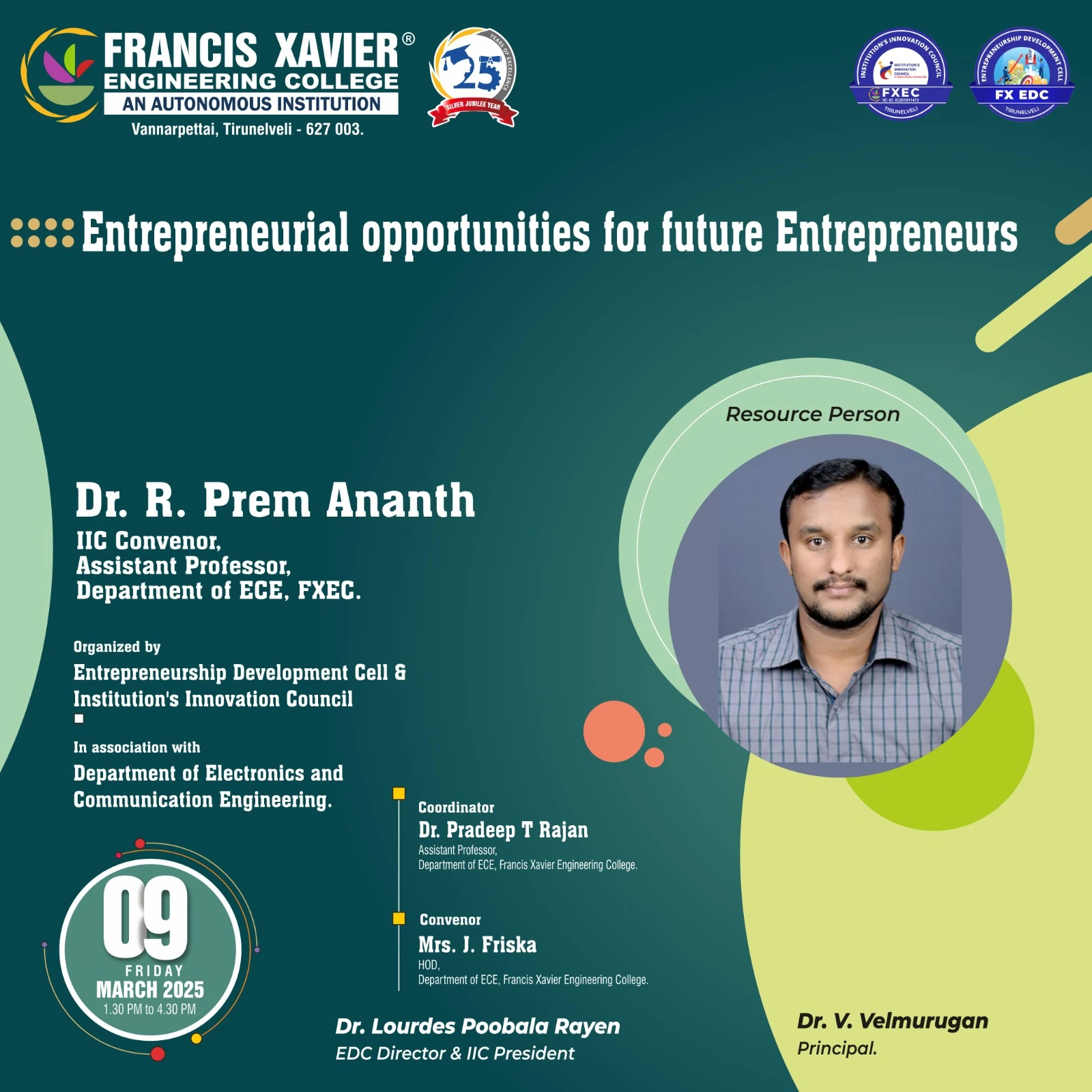
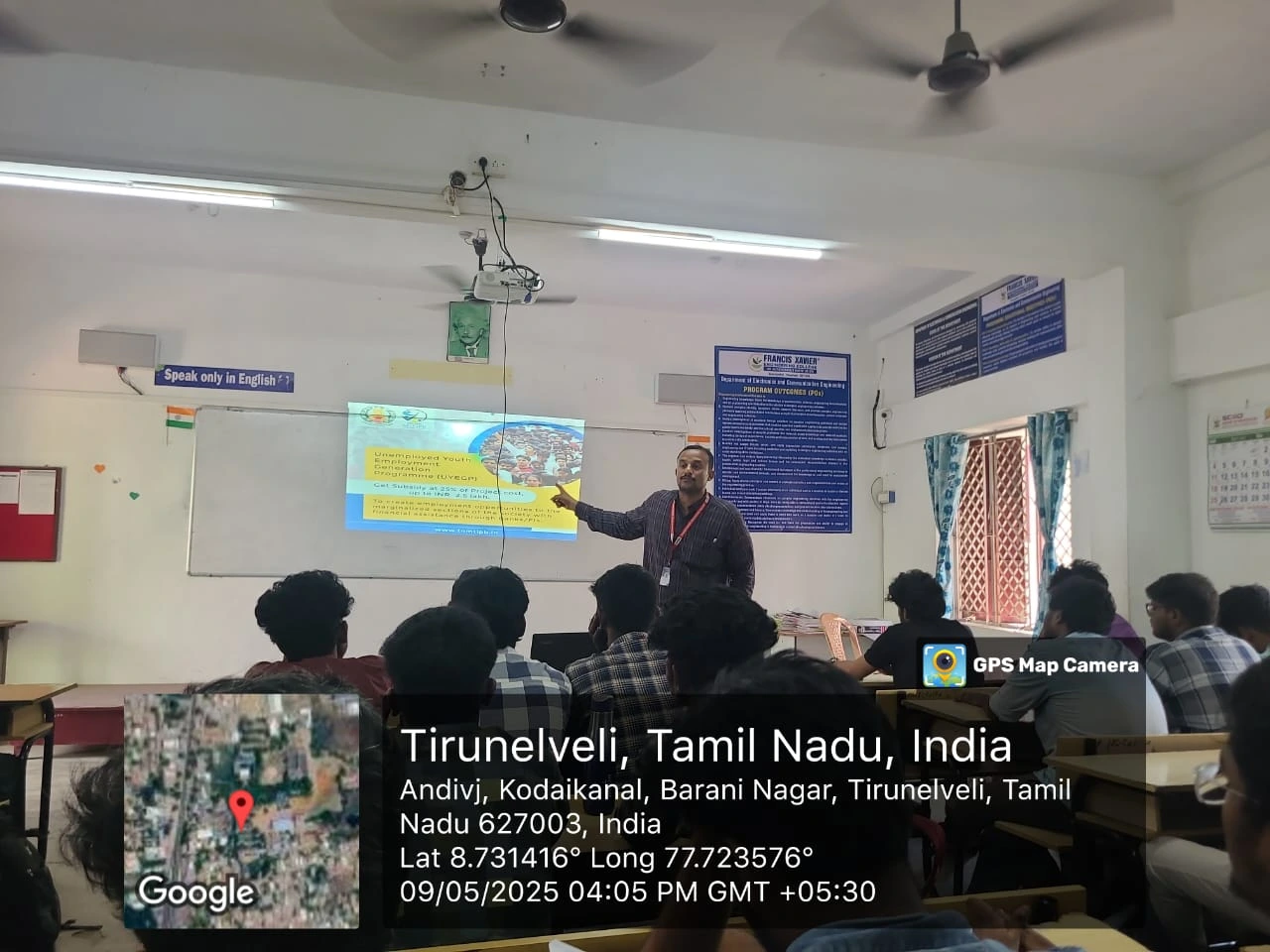
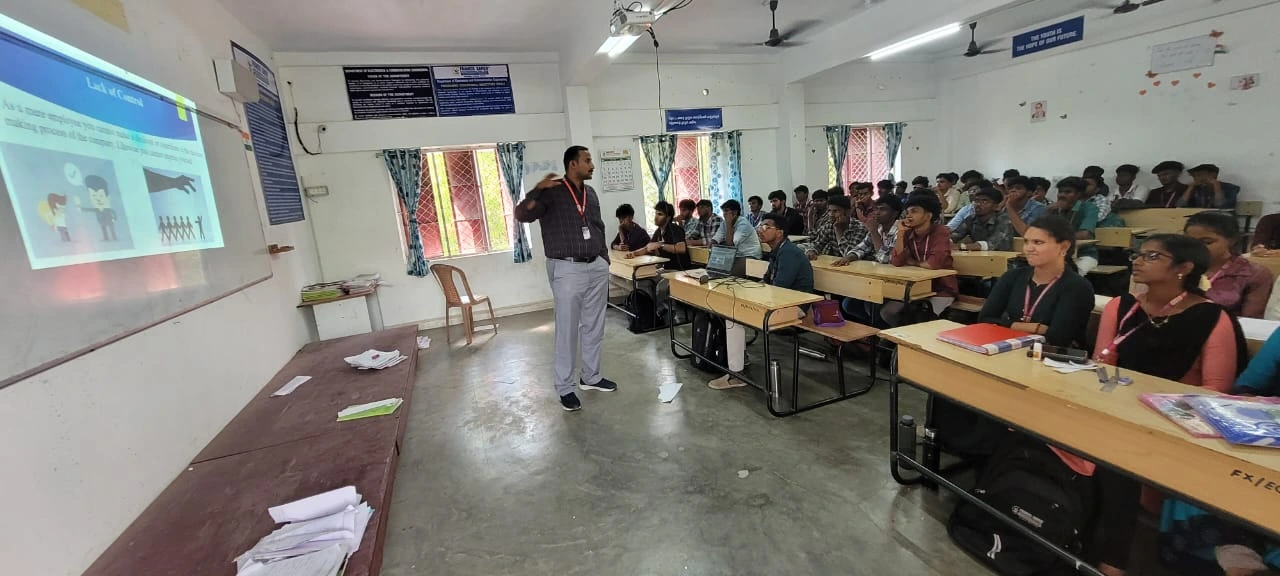
On 09.05.2025 a session was organized on the title “Entrepreneurial opportunities for Future Entrepreneurs” by the Institution Innovation Council in association with Entrepreneurship Development Cell and Electronics and Communication Engineering department. The session was handled by Dr R Prem Ananth, IIC Convenor, Assistant professor/ ECE, Francis Xavier Engineering College. 52 I ECE B students and 2 faculties participated in the program. This event was coordinated by Dr. Pradeep T Rajan, Assistant Professor, Department of ECE, Francis Xavier Engineering College.

Key Highlights

During his presentation, the speaker emphasized several novel entrepreneurial ideas that are ideally suited for the next generation of innovators, particularly in rural and semi-urban settings. These ideas were chosen for their low capital investment, eco-friendliness, and capacity to address unmet market needs. Some of the key business opportunities highlighted during the session were:

  1. Mushroom Farming: Speaker elaborated on the increasing demand for mushrooms as a nutritious and high-protein food source. Mushroom cultivation can be started with minimal investment, even in small spaces, and has a short production cycle. Students were informed about the basic requirements, including temperature control, substrate preparation, and market channels. This business was presented as an ideal venture for budding agri-entrepreneurs.
  2. Solar Dryer for Coconuts: With a large number of coconut farmers in southern India, the concept of using solar dryers to dehydrate coconuts was introduced. This not only reduces post-harvest losses but also adds value to the product. The idea combines renewable energy with agritech, aligning with sustainable development goals and offering potential for engineering-based innovation.
  3. Meat-Eating Worms Business: This unconventional but highly profitable business idea revolves around using mealworms or black soldier fly larvae to process organic waste. The worms are then harvested for use in animal feed or organic fertilizers. He discussed how this can help manage waste sustainably while generating revenue.
  4. Pirandai Plant Value-Added Products: Pirandai (Cissus quadrangularis), a medicinal plant commonly found in Tamil Nadu, was showcased as a resource for making health supplements, chutneys, and powders. This venture leverages traditional knowledge and local resources to tap into the growing market for herbal and ayurvedic products.
  5. Skill and Service-Based Industries: Students were encouraged to explore businesses that require professional skills rather than physical products. This includes services such as plumbing, electrical work, home automation, mobile repair, and digital marketing. Dr. Ananth pointed out how even small service-based enterprises can scale with the right customer base and quality assurance.
  6. Content Writing: In the digital era, content is king. Dr. Ananth discussed how students with strong language and communication skills can pursue freelance or agency-based content writing careers. Opportunities include blogging, copywriting, SEO content, and social media content creation. He emphasized that this field requires minimal investment and can be pursued alongside academics.
  7. Eggshell Membrane & Vegan Snacks: A futuristic idea discussed was the development of vegan health snacks utilizing eggshell membrane extract, known for its high collagen and nutritional content. This innovative concept blends biotechnology and food science, and Dr. Ananth encouraged students to think creatively about how such products could cater to health-conscious markets.

Conclusion

The session “Entrepreneurial Opportunities for Future Entrepreneurs” served as an eye-opener for the students. It highlighted the importance of thinking innovatively, utilizing local resources, and embracing sustainable business models.
  • Share: