An Autonomous Institution
Accredited by NBA(CSE, ECE, EEE, MECH)
AICTE Sponsored Margdarshan Mentor Institution
DST-FIST Supported Institution | ISO 9001:2015 certified
Recognised Under Section 2(f) & 12(B) of the UGC Act,1956
103/G2, Bypass Road, Vannarpettai, Tirunelveli, Tamil Nadu, India - 627003.

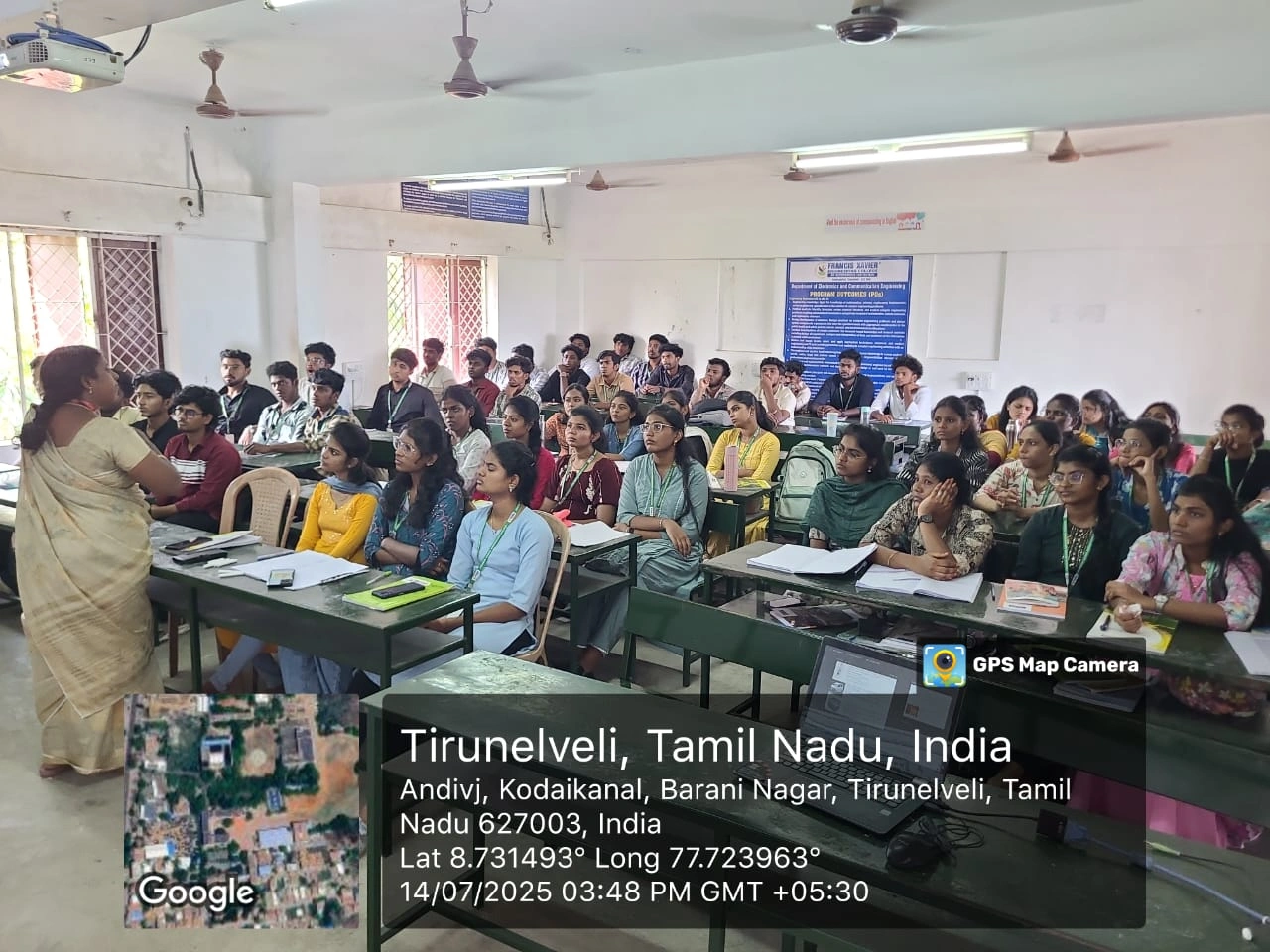
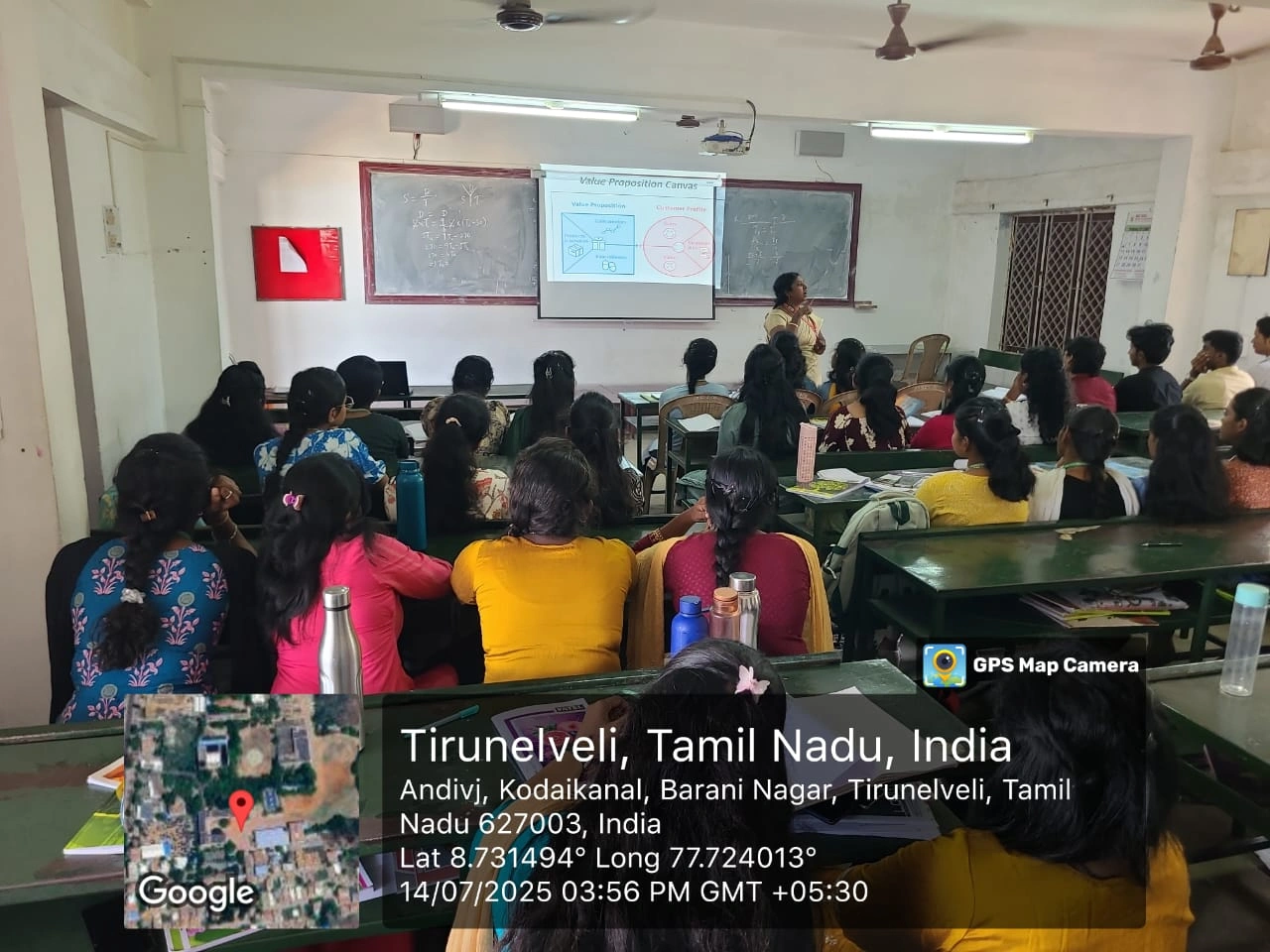
On 14.07.2025 aSession on “Achieving Value Proposition Fit and Business Fit” was organized by the department of Electronics and Communication Engineering and IIC in association with the Entrepreneurship development cell. The session was handled by Dr V M Sangeetha, Assistant professor, MBA, FXEC Tirunelveli.56 students and 2 faculties participated in the program. This event was coordinated by Dr R Prem Ananth, IIC Convenor of FXEC.
Guest speaker began the session by introducing the concept of Value Proposition Fit, which refers to the alignment between the product or service being offered and the actual needs and problems of the target customers. She elaborated on the Value Proposition Canvas (VPC), a strategic tool that helps in designing products that resonate with customers by mapping the customer segment's gains, pains, and jobs against the products, gain creators, and pain relievers.
To illustrate this concept, a successful example of the Nano car by Tata Motors—initially launched as the world’s cheapest car to meet the aspirations of India’s lower-middle-class population. However, despite its innovative positioning and affordability, Nano failed to achieve product-market fit. It did not align well with the emotional and aspirational values of customers, who perceived the car as "cheap" rather than “value for money.” The failure highlighted how a good product without a true value proposition fit cannot succeed.
Another illustrative example was Crystal Pepsi, a clear cola launched in the 1990s. Though novel in appearance and free of caffeine, it failed to connect with customer expectations. Consumers found the taste confusing and unappealing, and the product lacked a compelling reason for its existence in the market. The case of Crystal Pepsi highlighted the importance of achieving business fit, which involves aligning product design with market demand, customer behavior, and sustainable business models.
Guest speaker concluded the session by emphasizing the need for entrepreneurs to constantly test, validate, and refine their value propositions. Participants gained actionable insights into how aligning customer needs with product features and a scalable business model is essential for startup success.